The Concept Of Heaven And Hell In Ibn Sina’s Philosophical Sufism: A Comparative Analysis With Cognitive Psychology
 Abstract Views : 58
 PDF Downloads : 0
Keywords:
Paradise, Hell, Ibn Sina, Cognitive PsychologyAbstract
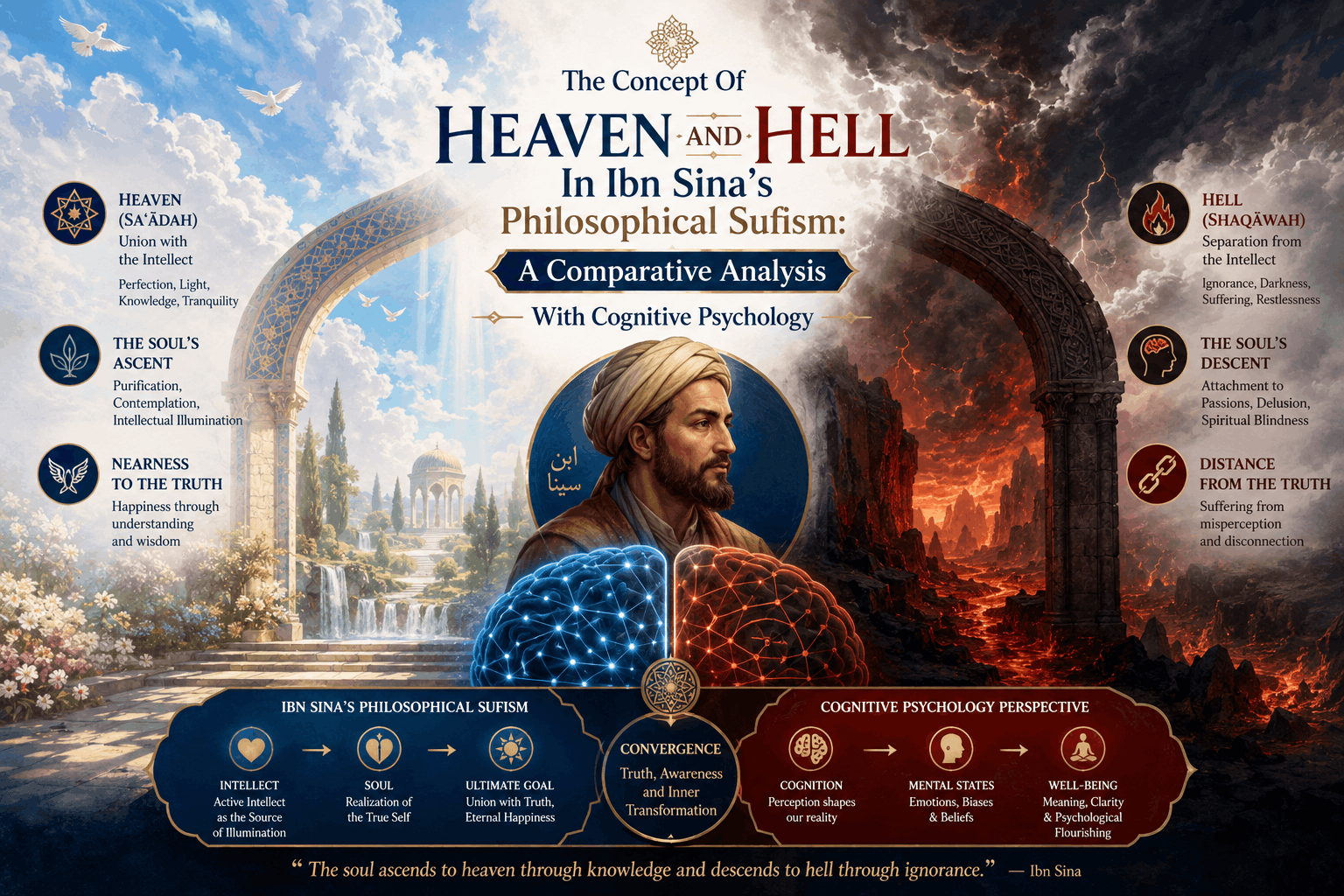
In the current internet era, social media platforms such as Instagram and TikTok often hinder people’s understanding of spirituality and tend to weaken reflective theological comprehension. In this context, understanding Heaven and Hell becomes highly important. This study employs a descriptive qualitative method with literature research (library research) as the data collection technique. The results of this study indicate that Ibn Sina viewed Heaven and Hell as states of consciousness influenced by the quality of an individual’s soul. This research explores contemporary perspectives on these two concepts through historical and philosophical analysis, emphasizing the importance of deeper spiritual narratives. According to Ibn Sina and Tasawuf, life after death is closely related to morality and individual integrity, while cognitive psychology views it as a mental condition shaped by patterns of thought.
References
Al-Attas, Syed Muhammad Naquib (1993). Islam and Secularism. Kuala Lumpur: ISTAC.
Arysad, Mujahid Mallombasi Dkk. (2024) Ibnu Sina (Avicenna). Jurnal Ulil Albab: Jurnal Ilmiah Multidisiplin Vol 4 (1).
Baym, Nancy K. (2023) Personal Connections in the Digital Age. Cambridge: Polity Press.
Aaron T. Beck, (1976) Cognitive Therapy and the Emotional Disorders. New York: Penguin.
Campbell, Heidi A., dan Tsuria, Ruth (2021) Digital Religion: Understanding Religious Practice in Digital Media. New York: Routledge.
Gutas, Dimitri. (2014) Avicenna and the Aristotelian Tradition. Leiden: Brill.
Hasan, IqbaI, (2008) Analisis Data Penelitian Dengan Statistik, Jakarta: Bumi Aksara.
Hjarvard, Stig. (2008) "The Mediatization of Religion: A Theory of the Media as Agents of Religious Change." Northern Lights 6, no. 1.
Lazarus, Richard S. (1991) Emotion and Adaptation. New York: Oxford University Press pp 213–218.
Nasrullah, Rulli (2022) Media Sosial: Perspektif Komunikasi, Budaya, dan Sosioteknologi. Bandung: Simbiosa Rekatama Media.
Neisser, Ulric. (2014) Cognitive Psychology. New York: Psychology Press.
Nirwan Wahyudi AR, Dkk (2023). Fungsionalisasi Budaya Lokal sebagai Alternatif sarana Dakwah di Era Digital. Shoutika: Jurnal Studi Komunikasi dan Dakwah. Vol 3 (1).
Statista (2024) TikTok Usage among Gen Z in 2024. New York: Statista Research Department.
Sina, Ibn (1906) Risālah al-Adhawiyyah fī al-Ma‘ād. Kairo: al-Maṭba‘ah al-Amīriyyah.
Sina, Ibn (1938) Kitāb al-Najāt. Kairo: Maktabah al-Khānjī.
Sina, Ibn (1957). Al-Ishārāt wa al-Tanbīhāt, ed. Sulaymān Dunyā Jilid III. Kairo: Dār al-Ma‘ārif.
S. Beck, Judith (2011) Cognitive Behavior Therapy: Basics and Beyond. New York: Guilford Pre
Published
How to Cite
Issue
Section
License
Copyright (c) 2026 Jurnal Islam Pesisir dan Kajian Keislaman

This work is licensed under a Creative Commons Attribution-NonCommercial 4.0 International License.